

Written by Nick Maini for the Greater London Project. Originally published on Suburban Mantuan.
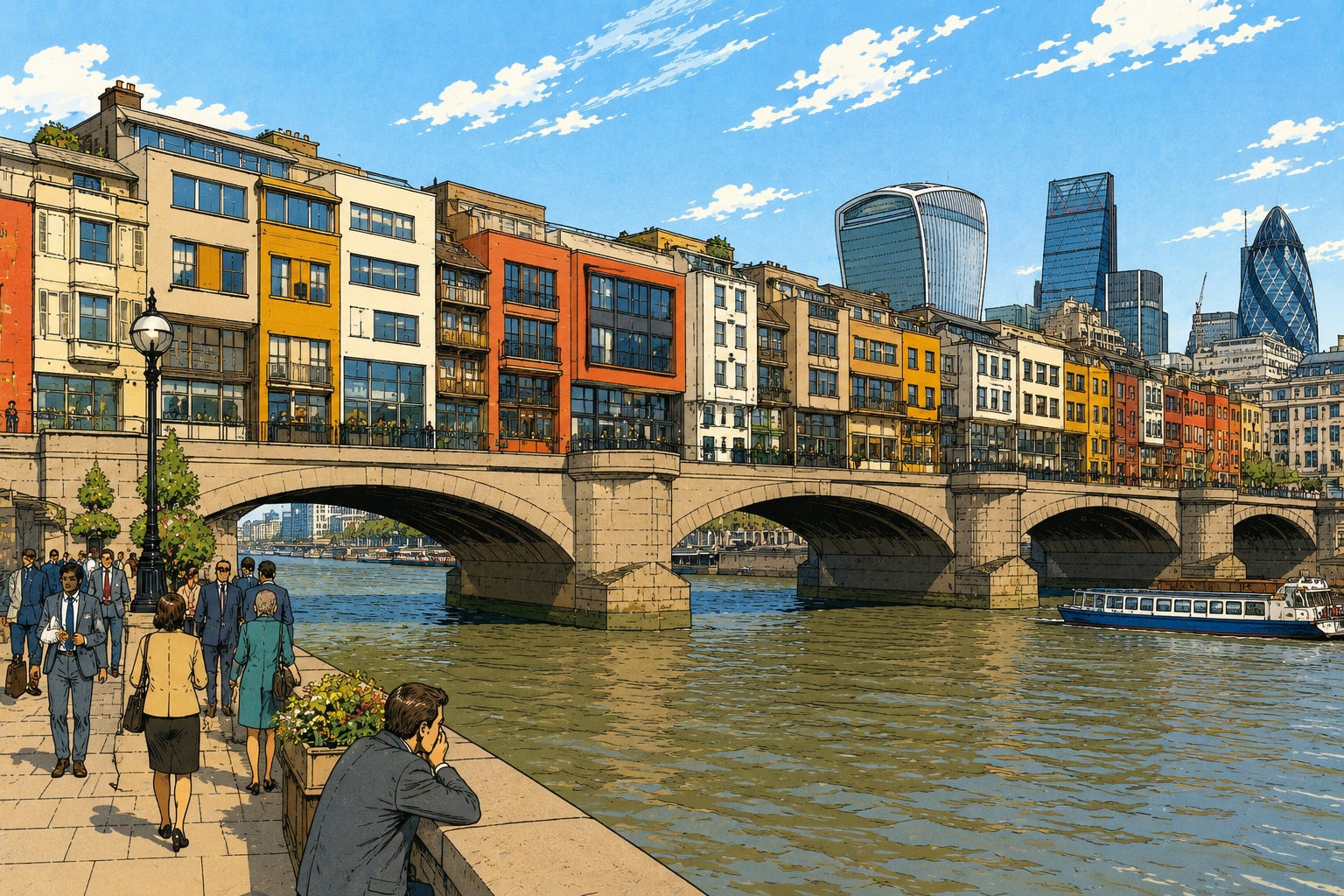
For centuries, London’s only bridge paid for itself by renting out shops and houses built upon it. Today London’s bridges are bare, the structures are failing, and no one can agree who should pay for the repairs.

What is a street bridge?
Occasionally, I commute to work on the Thames Clipper. From the riverboat’s deck, you can gaze up at one of the densest, most expensive cities on earth. Below the boat’s hull runs one of the largest empty spaces in any global capital. Every one of the twenty bridges that cross the river stands as empty as the river.
But it was not always this way.
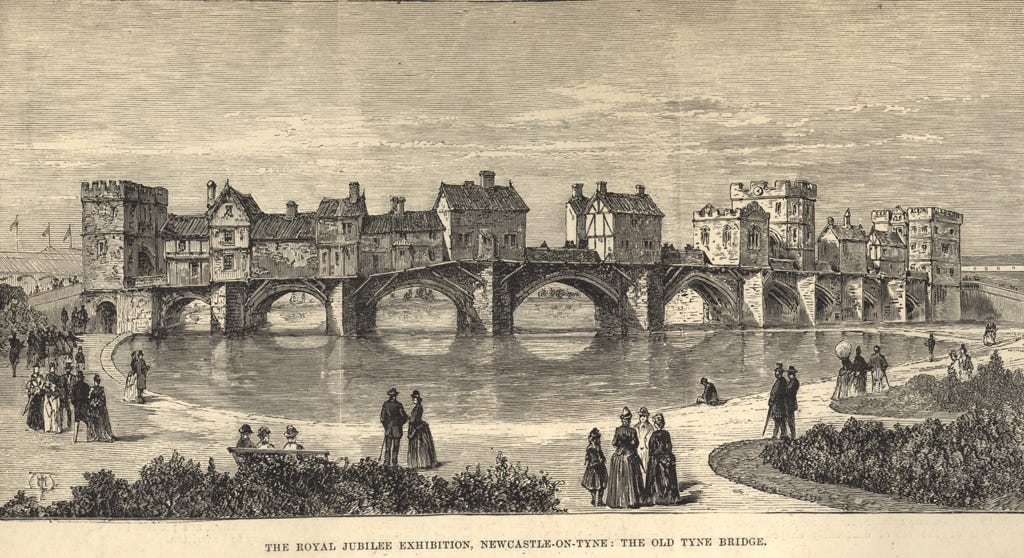
The original bridge in London, Old London Bridge, was not just a crossing; it was a street: a working, inhabited place, alive with trade. It carried 138 buildings, including shops, dwellings, workshops and even a chapel.
The rents, administered from 1282 by a property trust set up for the purpose, funded the bridge’s upkeep across twenty generations. The bridge was a working high street and the financing vehicle for its own maintenance.1
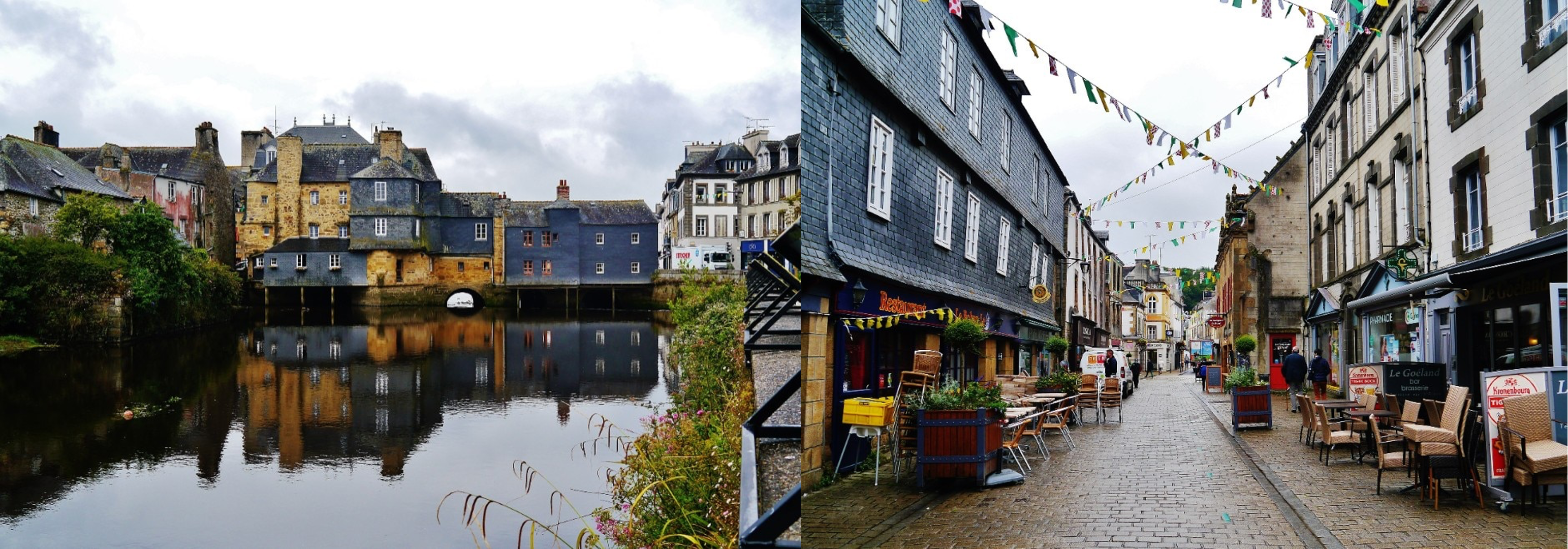
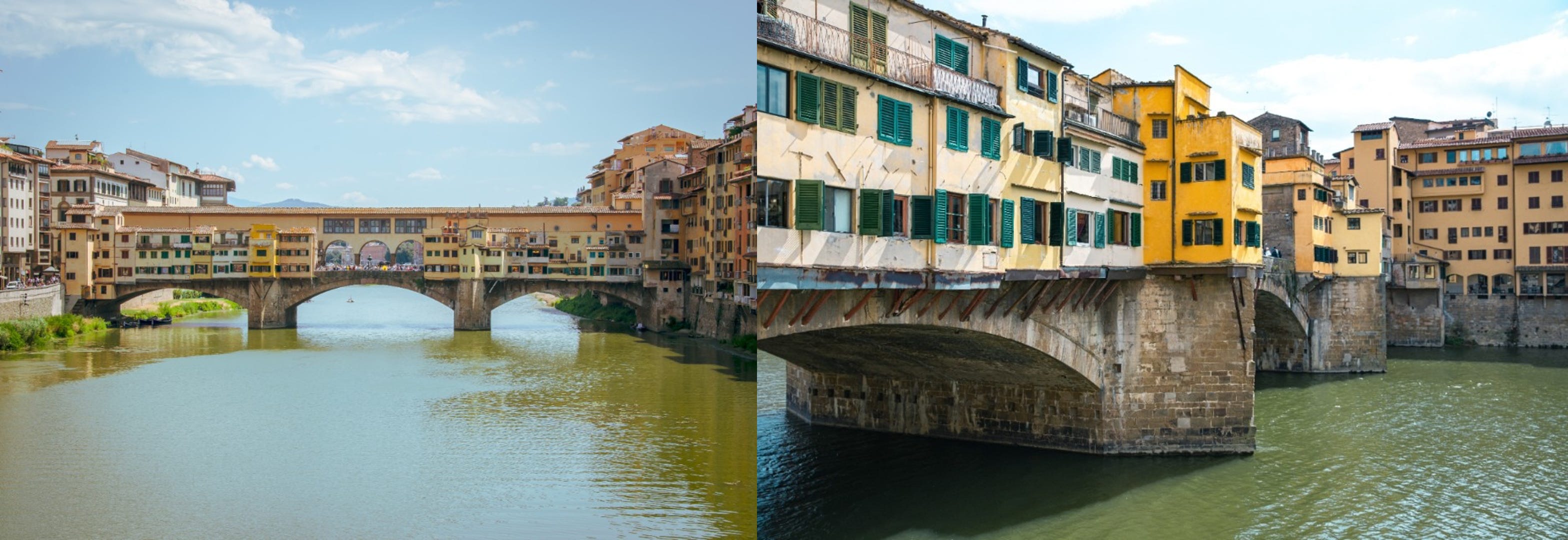
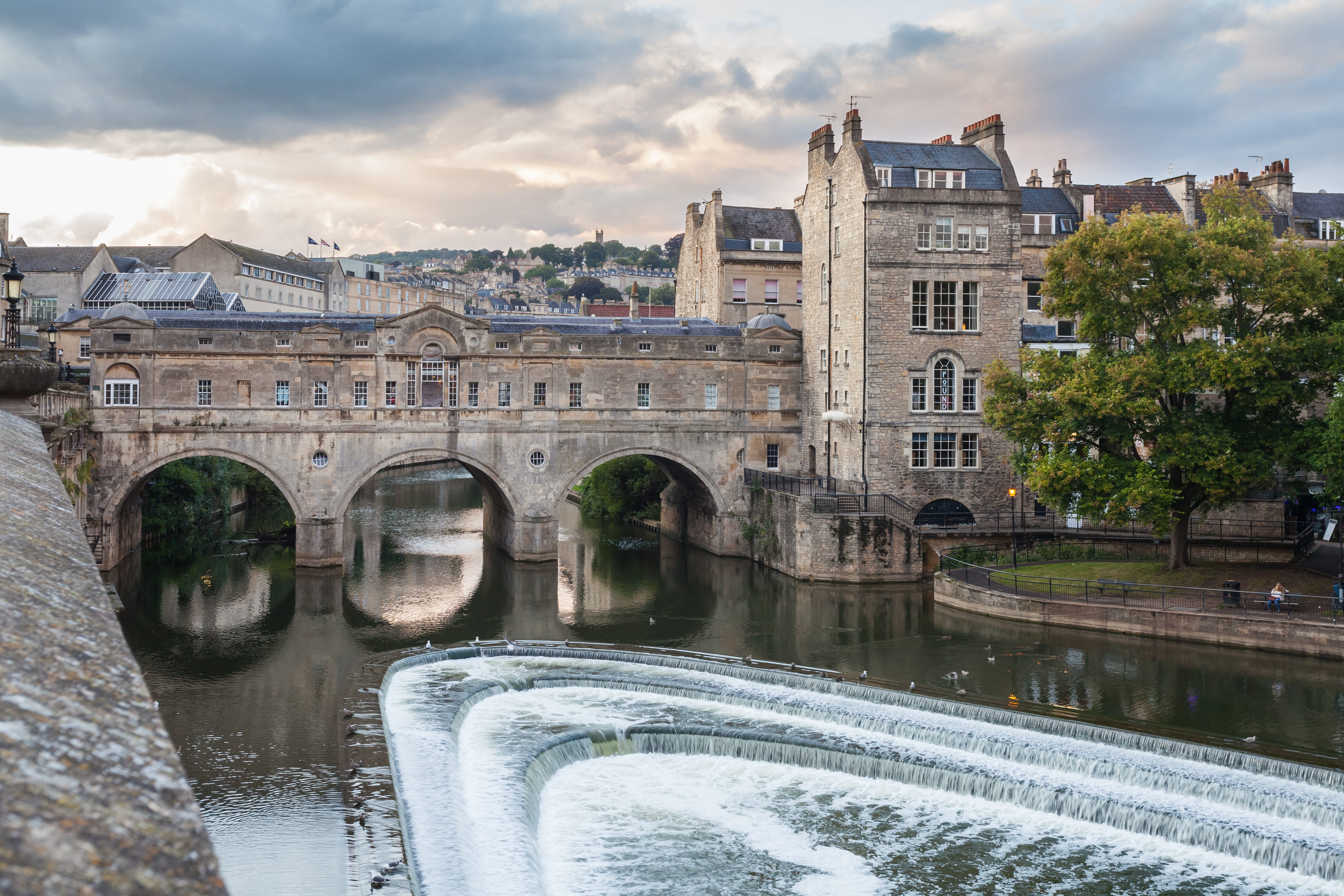
For six hundred years, this was simply the most prominent example of a bridge type that was completely normal in pre-industrial Europe. France had dozens of inhabited bridges; in Paris, there were houses on the Pont Notre-Dame and the Pont au Change until the 1780s.2 Italy also had dozens, including the Ponte Vecchio and Rialto. Germany still has the Krämerbrücke at Erfurt, continuously inhabited for seven hundred years. But the typology disappeared from Western practice almost entirely and nothing comparable has been built in Europe since Pulteney Bridge in Bath in 1773.
Why street bridges used to make sense, and why they do again
For most of history, a river was a city’s main commercial corridor. The Thames was lined with wharves and was the fastest way to move people and goods through London. Every great pre-industrial city was built on water for the same reason. Bridging the river took valuable space out of commercial use, so any bridge worth constructing was also worth lining with buildings.
Today the river has emptied. The working docks have gone, and the Thames only carries the occasional clipper and a few tourist boats. But London is more vibrant than ever: the land around the river has become some of the most expensive on earth, and the Thames now runs as a void through the middle of a city that cannot densify fast enough to meet demand. Putting buildings on bridges no longer takes commercial space out of use. Instead, it adds to density.
Street bridges are unviable almost everywhere on earth for two reasons: cars are dominant, and the land is not valuable enough to justify the engineering. London is the rare exception. Property prices are among the highest in the world, and private traffic is being regulated out of the centre.
Bridges that pay for themselves
A bridge typically takes one of three forms: transit, amenity, or street. Setting aside tolled bridges, only the street bridge unlocks the commercial and residential development whose value can be capitalised at construction and used to fund maintenance thereafter.
Pure-amenity bridges have no income to capitalise: consider, for instance, London’s proposed Garden Bridge, which lost £43m in public funds before being cancelled in 2017.3 Pure-transit bridges have no income either (unless tolled), which is why Hammersmith Bridge is now projected to cost a single borough at least £300m, with more than £50m already spent on stabilisation works since 2019.4
By contrast, a street bridge with several storeys of mixed-use frontage on a 250m deck generates rents that can be sold upfront as long leases for a substantial capital sum, with the freehold and ground rents retained by a trust to fund maintenance in perpetuity. Any residual gap between that capital sum and the construction cost can more reasonably be met by the public sector or a charitable trust. This is exactly how Old London Bridge worked for six centuries.
Street bridges offer another source of financial value that may outweigh even the rents from buildings on the deck itself: the approaches. The land on either side of a street bridge benefits from the same uplift, and that secondary capture can be substantial. At present, the car-oriented nature of most existing Thames bridges means that there is a gyratory or flyover at either end that materially suppresses surrounding land values. A properly designed street bridge would encourage the redesign of the approaches as streets too, unlocking more housing and commercial floorspace on the banks than the bridge itself.
Why did street bridges disappear?
Street bridges fell out of fashion for reasons that have since ceased to apply. Sanitation, fire, aesthetics, traffic. These four objections defeated the street bridge in the eighteenth century. None of them holds today. The sanitary case was solved by nineteenth-century sewer engineering. Modern construction has solved the fire problem; gone are the timber-framed, thatched-roof buildings with open hearths and no water mains. The Georgian instinct to clear the medieval clutter from London’s bridges has long since inverted; today, we pay tourist prices to visit the Ponte Vecchio in Florence. Traffic is now a question of approach design, not structural impossibility, and the constraint loosens as the congestion charge and ULEZ push private vehicles out of central London.
But in London, none of these reasons is why Old London Bridge actually came down. In reality, the bridge’s guardian trust was undermined by its own wardens. They were on the take, the leases were allowed to lapse, and a speculative rebuild in 1745 backfired. By 1755 the Bridge House Estates were petitioning Parliament to demolish the buildings. This was not because the financial model had collapsed, but because the institutional governance had failed.5
Who would build it now?
As it happens, the same trust still exists today. After the 1756 reforms, Parliament put the Bridge House Estates on the disciplined, capital-accumulating footing it has been on ever since. Today, the City Bridge Foundation holds around £1.6bn in assets and still maintains the City’s five Thames crossings. Between 1995 and 2025, it gave away more than £840m in grants, of which only £50-60m went to bridge maintenance. Most of the remainder went on non-bridge charitable funding initiatives related to “climate justice, access to justice, racial justice, and economic justice.” It has not commissioned a major new river crossing since the Millennium Bridge in 2002.6
The trust is once again in crisis. This time, the crisis is mission drift rather than fraud, but it is the same shape of problem: an institution that has stopped doing what it was set up to do.
After 250 years and with £1.6bn in accumulated funds, will the City Bridge Foundation finally build a street bridge again?
Build new, not rebuild
First, let’s be clear that a new bridge would be most appropriate, as opposed to a rebuild of an existing river crossing. London does not have enough bridges as it is and a new build avoids most heritage implications. The two obvious gaps in central London’s bridge network are Rotherhithe to Canary Wharf, and the long stretch between Waterloo and Blackfriars where the south bank is densifying fastest. Either could carry a street bridge tall enough to be commercially viable without breaking protected view corridors.
A street above the river
Picture a new London street bridge. A wide structure, four storeys high on both sides, the river visible between colonnades. Ground floor: shops, a wine bar, a restaurant whose tables spill onto the pavement on summer evenings. Upper floors: flats, small offices, a gym on the roof with the best view of any in London. On a clear evening, you watch the sun set over Westminster from a window above moving water.
In January 2026, the Bazalgette Embankment opened at Blackfriars: an acre and a half of new land reclaimed from the Thames. Once the city’s busiest thoroughfare, the river is now its largest underused space, and London is finally, hesitantly, starting to reclaim it.
The Thames is the heart of London: the longest sightline in the city where the sky opens up. A new London street bridge would produce a beautiful and valuable urban form that would enable Londoners to enjoy the river even more, while paying for its own maintenance forever.
Most crucially, London has all the conditions to revive the form: high density, declining car use, and the institution that ran the original.
A bridge can be more than a way across the river. It can be a place to inhabit too.7
The Greater London Summit - Saturday 30 May
Join us for the first Greater London Summit - bringing together Greater Londoners to discuss ideas to make the capital city an even better place to be. Speakers include:
Sam Bowman, Head of Publishing at Stripe Press & Founder of Works in Progress;
Munira Mirza, Founder of Civic Future;
Lawrence Newport, Founder of Looking for Growth;
Julia Willemyns, Co-founder of the Centre for British Progress.
(More to be announced)
Venue details will be released closer to the time, it is a short walk from Charing Cross and Waterloo.
You can register to attend the conference here.
The Summit includes an ‘unconference’ slot where participants can run their own sessions on the day. If you want to pitch a particular session, fill out this form.
Community notes
We’ve been reading:
Mick Jagger and Eric Clapton win battle to stop 29-storey block being built by the Thames - by Daniel Lavelle
Another fundraiser outside London stations is under investigation - by Jim Waterson, Polly Smythe and Cormac Kehoe
Tony Travers: London local election result could trigger housebuilding slump - by Simon Hunt
Things to do:
London Open Gardens 2026 (the weekend of the 6th and 7th of June. For suggestions of where to visit, read Sienna James’ article for the Greater London Project)
London art exhibitions to see in May - from Wallpaper

New concept to me- thanks for sharing these details. Any civic or community space here would surely shine too, great views and connection between boroughs.
The City of London bridges: Tower, London, Southwark, Millennium and Blackfriars, are well endowed through the City Bridge Foundation https://www.citybridgefoundation.org.uk/about, an organisation with a long and interesting history which uses its considerable surplus to fund charities.